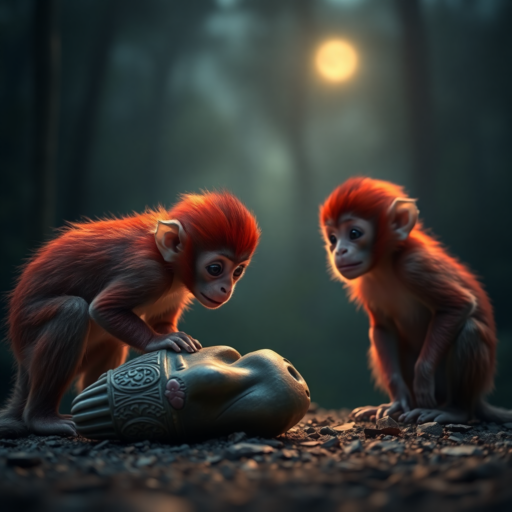
Non c’era niente che potesse fare per aiutare i portoghesi se non sperare che morissero alla svelta e provare a tornare a Cananeia. Mentre cercava di stabilire se fosse meglio andarsene subito o aspettare per vedere l’ultimo cadavere stramazzare, aveva avvertito un movimento sui rami del giovane Pao Brasil sotto al quale era nascosto. Una comitiva di Mico-Leao-Dourado stava osservando ora lui e ora i portoghesi morenti senza emettere un suono e con la loro tipica espressione da faraone consapevole dell’arrivo dei popoli del mare. Quando guardavano lui sembrava che lo pregassero di non far rumore per non turbare lo spettacolo, mentre si stiracchiavano sui rami e il loro colore rosso-dorato faceva il paio con il rosso-brace della corteccia del Pao. Il fato che non esiste, pensava Kaíque, non era privo di un certo senso dell’humor; partiti alla ricerca dell’El Dorado, l’unica cosa dorata che avevano visto era il pelo delle minuscole scimmiette a cui piaceva fare dispetti agli umani.
…
Oracolo – Chapter 13
Gonzalo, known in his tribe as Kaíque (he who rules the water), paved the way for the Portuguese to reach the Paraná River, walking silently on the perennial layer of damp, decomposing leaves, which not only provided organic material for all the creatures that needed it, but also muffled his footsteps. Bacharel had been giving European names to his trusted men (to feel less far from home) for about thirty years. A dozen epiphytic orchids before the group had entered hostile territory; sometimes they grew on Jacaranda trunks and sometimes on Pao Brasil, almost never on palm trunks. Kaíque knew that when he saw them, he was now in the White King’s slave reservoir, and encountering them could be unpleasant, so he had said nothing to the Portuguese. Without being distracted by the constant chatter of the parrots, he concentrated on the path that led to the river. The capybaras used it to go drinking in the evening, the cobras avoided it, and he followed it, feeling at ease in the Atlantic Forest. The Portuguese, who had not given up carrying sharp blades and muzzle-loading arquebuses, looked like walking sausages wearing randomly chosen clothing. They sweated profusely and scratched themselves under their rough clothes. Some began to complain, and everyone wanted to take a break, as they had been marching for quite some time. Kaíque had said that they would take a break at the river, not far from there.
…